
From Microbial Systems to Valuable Biological Products
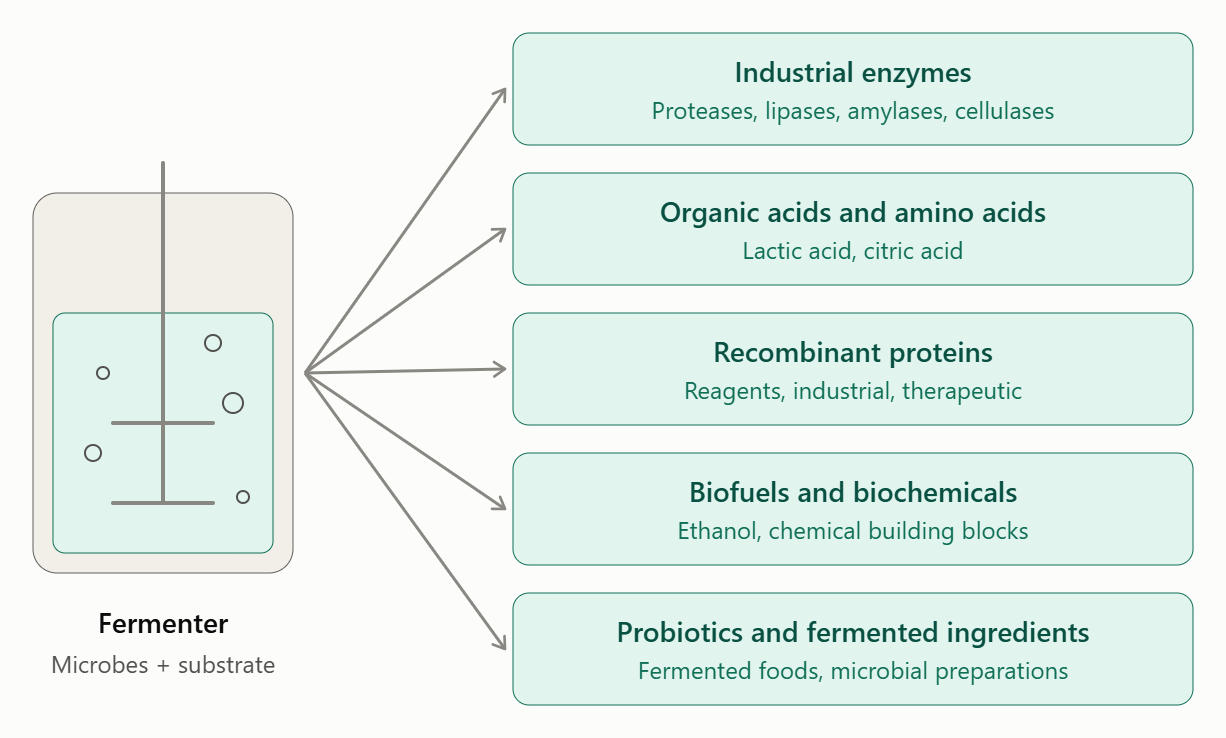
Fermentation and biological production are fundamental processes in modern biotechnology, enabling the conversion of biological resources into valuable compounds for scientific, industrial, pharmaceutical, agricultural, and environmental applications. By combining microbial metabolism, controlled cultivation, and process engineering, researchers can develop efficient methods for producing enzymes, organic acids, amino acids, therapeutic proteins, biofuels, and other biologically derived materials.
As biotechnology continues to evolve, fermentation technologies are becoming increasingly sophisticated. Advances in microbial strain development, bioreactor design, metabolic engineering, and process monitoring are helping researchers improve productivity, optimize resource utilization, and develop more sustainable production systems.

Understanding Fermentation in Biotechnology
Fermentation is a biological process in which microorganisms or other biological systems transform substrates into metabolic products. In industrial biotechnology, the term is also widely used for controlled microbial cultivation processes designed to produce specific compounds under defined conditions.
Bacteria, yeasts, filamentous fungi, and selected other microorganisms can serve as production organisms. Each group possesses distinct metabolic characteristics that influence its suitability for a particular application.
For example, yeast is frequently used in the production of ethanol and recombinant proteins, while bacterial systems are important for manufacturing enzymes, amino acids, and selected pharmaceutical intermediates. Filamentous fungi are particularly useful for producing industrial enzymes, organic acids, and specialized metabolites.
The selection of an appropriate production organism depends on several factors, including substrate availability, product characteristics, growth requirements, genetic stability, and downstream processing considerations.
Major Types of Fermentation Processes
Fermentation processes can be classified according to oxygen requirements, cultivation methods, and the physical characteristics of the production environment.
1. Aerobic Fermentation
Aerobic fermentation involves microbial cultivation in the presence of oxygen. Oxygen supports respiratory metabolism in many microorganisms and can influence biomass formation, substrate utilization, and product synthesis.
This approach is widely applied in the production of microbial biomass, industrial enzymes, amino acids, and certain organic acids. Efficient oxygen transfer is particularly important because oxygen availability may become a limiting factor as microbial populations increase.
Process parameters such as agitation speed, aeration rate, temperature, and dissolved oxygen concentration must therefore be carefully controlled.

2. Anaerobic Fermentation
Anaerobic fermentation takes place without requiring molecular oxygen as the terminal electron acceptor. Depending on the organism and metabolic pathway, these processes can generate products such as ethanol, lactic acid, and other fermentation metabolites.
Anaerobic systems are important in food biotechnology, renewable energy production, waste valorization, and the biological conversion of organic substrates.
Their performance depends on the composition of the feedstock, microbial community or strain, pH, temperature, and accumulation of metabolic products.

3. Batch Fermentation
In batch fermentation, the production vessel is initially supplied with the required culture medium and inoculum. Microorganisms grow and produce metabolites over a defined period without continuous addition of fresh nutrient medium, although gases and other process-control inputs may be supplied.
Batch cultivation is widely used in laboratory research, pilot-scale experiments, and industrial manufacturing. It provides a relatively straightforward operating strategy and allows individual production cycles to be monitored independently.

4. Fed-Batch Fermentation
Fed-batch fermentation involves the controlled addition of nutrients during cultivation. This strategy helps regulate substrate availability, reduce substrate inhibition, and maintain favorable conditions for microbial growth or product formation.
It is particularly useful when high substrate concentrations would negatively affect cell physiology or when product formation depends on a specific nutrient-feeding profile.
Fed-batch cultivation is commonly employed in recombinant protein production, microbial enzyme manufacturing, and other high-cell-density processes.

5. Continuous Fermentation
Continuous fermentation involves the ongoing introduction of fresh culture medium and removal of an equivalent volume of culture broth. Under appropriate conditions, this can maintain a relatively stable microbial population and production environment.
Continuous systems can offer high equipment utilization and consistent operating conditions. However, they require careful control of contamination, population stability, nutrient supply, and process performance over extended periods.

Microorganisms Used in Biological Production
The microorganism selected for a fermentation process strongly influences product yield, quality, production time, and manufacturing cost.
Bacteria: Bacterial production systems are frequently used to manufacture enzymes, amino acids, organic acids, and recombinant proteins. Their relatively rapid growth and well-characterized genetics make selected bacterial species valuable tools in industrial biotechnology.
Yeasts: Yeasts are important in food production, bioethanol manufacturing, and recombinant protein expression. Their eukaryotic cellular machinery can provide advantages for producing certain proteins that require processing beyond what bacterial systems can perform.
Filamentous fungi: Fungi are major producers of extracellular enzymes, organic acids, and specialized metabolites. Their ability to secrete proteins into the surrounding medium can simplify the recovery of some products, although their morphology may complicate mixing and oxygen transfer.
Actinomycetes and other specialized microorganisms: Certain microbial groups are valuable sources of biologically active compounds, industrial enzymes, and metabolites with specialized applications.
The development of production strains may involve classical selection, adaptive laboratory evolution, genetic engineering, or metabolic engineering. The chosen approach must be compatible with the intended application, regulatory requirements, and manufacturing strategy.

The Role of Bioreactors in Fermentation
A bioreactor provides a controlled environment for biological production. It enables operators to regulate the physical and chemical conditions required for microbial growth and product synthesis.
Common bioreactor configurations include stirred-tank reactors, airlift reactors, packed-bed systems, and specialized single-use cultivation platforms.
Stirred-tank bioreactors are widely used because they offer flexible control over mixing, aeration, temperature, and nutrient distribution. Airlift systems can reduce mechanical agitation requirements, while packed-bed configurations may be suitable for selected immobilized-cell or enzyme-based processes.
Important operating parameters include:
Temperature: Influences enzyme activity, microbial growth, and product stability.
pH: Affects cellular physiology, nutrient availability, and metabolic activity.
Dissolved oxygen: Determines whether oxygen availability meets the requirements of aerobic production.
Agitation and mixing: Promote nutrient distribution, heat transfer, and gas-liquid mass transfer.
Foam formation: Can interfere with operation and may require mechanical or chemical control.
Nutrient concentration: Influences biomass accumulation and metabolic pathways.
Pressure and gas composition: May affect oxygen transfer and the behavior of specific biological systems.
The optimal operating conditions vary according to the microorganism, product, medium composition, and reactor configuration. Therefore, process development generally requires systematic experimentation rather than the application of a single universal operating protocol.

Culture Media and Substrate Selection
Culture media provide the nutrients required for microbial growth and biological production. Their composition can include carbon sources, nitrogen sources, mineral salts, vitamins, trace elements, and other growth factors.
Common carbon sources include glucose, sucrose, glycerol, and selected agricultural or industrial by-products. Nitrogen may be supplied through ammonium salts, amino acids, yeast extract, or other suitable compounds.
The choice of substrate influences both production performance and economic feasibility. Refined substrates may provide consistent composition, whereas low-cost renewable feedstocks can support more sustainable manufacturing if their variability and impurities are adequately managed.
Researchers evaluate substrate selection according to nutritional suitability, availability, price, pretreatment requirements, and environmental impact. In some applications, agricultural residues and food-processing by-products can be converted into useful fermentation feedstocks, contributing to resource recovery and circular bioeconomy strategies.
Metabolic Engineering and Strain Optimization
Metabolic engineering focuses on modifying cellular pathways to improve the production of a desired compound. By understanding the relationship between genes, enzymes, regulatory networks, and metabolic fluxes, researchers can identify strategies for directing cellular resources toward a target product.
Approaches may include increasing the expression of pathway enzymes, reducing competing metabolic reactions, improving precursor availability, and enhancing cellular tolerance to product accumulation.
Systems biology, genome-scale metabolic models, transcriptomics, proteomics, and metabolomics can provide complementary information for identifying limitations in microbial production systems.
Synthetic biology extends these approaches by enabling the design and construction of biological systems with selected functions. Nevertheless, engineered strains must be evaluated for genetic stability, reproducibility, safety, and performance under production-scale conditions.
A strain that performs well in a small laboratory vessel may behave differently in an industrial bioreactor because of changes in oxygen availability, nutrient gradients, mixing, and other environmental factors.
Biological Products Obtained Through Fermentation
Downstream Processing and Product Recovery
Fermentation does not end when the target compound has been produced. The resulting culture broth may contain microbial cells, residual substrates, salts, unwanted metabolites, and other components that must be separated from the desired product.
Downstream processing includes the operations used to recover, purify, concentrate, and formulate biological products.
Depending on the product, these operations may include centrifugation, filtration, cell disruption, precipitation, membrane separation, chromatography, crystallization, and drying.
Extracellular products may be recovered from the culture medium, whereas intracellular products often require additional steps to release the target molecule from the cells.
Downstream processing can represent a substantial proportion of total manufacturing costs. Consequently, fermentation and purification strategies should be developed together. Improving product secretion, reducing unwanted by-products, or increasing product stability may simplify recovery and improve overall process economics.

Sustainable and Innovative Fermentation Technologies
Sustainability has become an important consideration in biological manufacturing. Fermentation can contribute to more resource-efficient production when renewable substrates, efficient microbial strains, and optimized processing strategies are used.
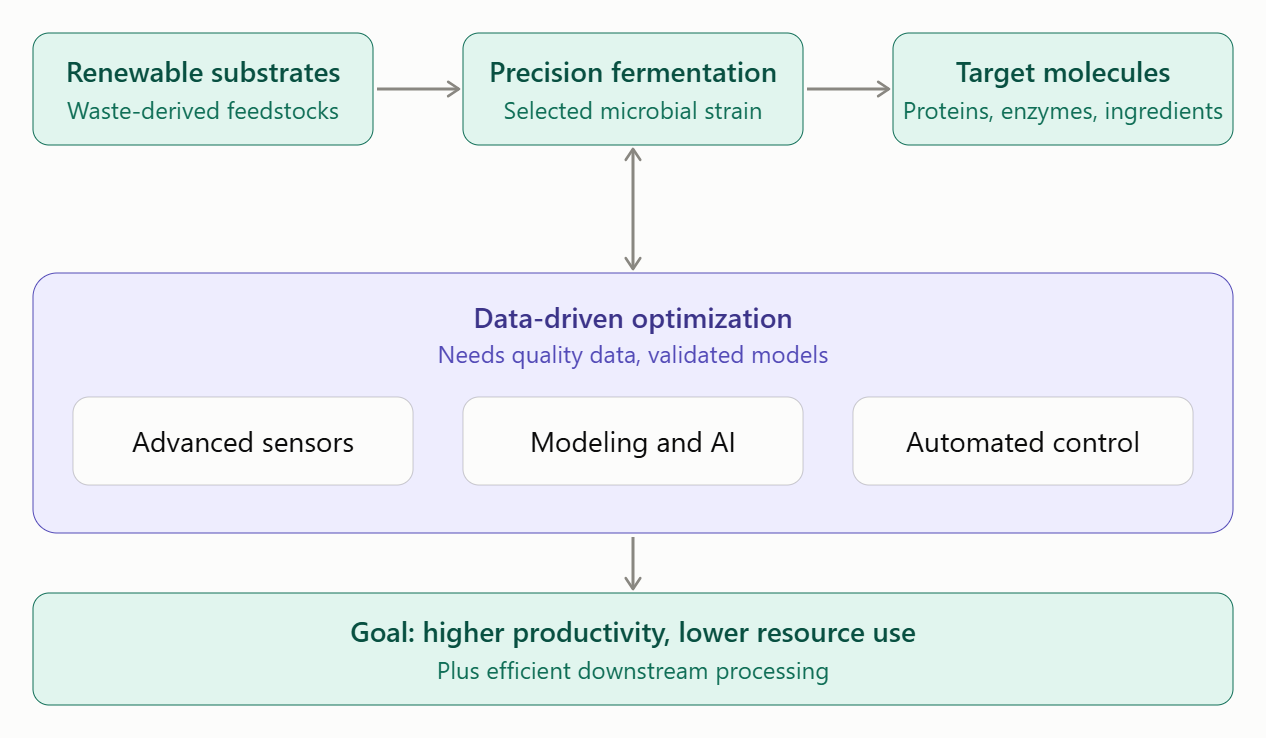
Emerging research areas include precision fermentation, microbial conversion of waste-derived feedstocks, cell-free biomanufacturing, automated process control, and the integration of artificial intelligence into bioprocess development.
Precision fermentation uses selected microorganisms to produce specific target molecules under controlled conditions. This approach can support the manufacture of proteins, enzymes, ingredients, and other compounds without relying exclusively on conventional extraction from their original sources.
Automation and data-driven optimization can help researchers identify relationships between operating conditions and production outcomes. However, the practical benefits depend on data quality, appropriate model validation, and the biological complexity of the system.
Future developments are likely to focus on combining strain engineering, advanced sensors, computational modeling, and efficient downstream processing to improve productivity while reducing resource consumption.
Conclusion
Fermentation and biological production form a central part of modern biotechnology. By using microorganisms and controlled biological systems, researchers and manufacturers can transform renewable substrates into enzymes, proteins, organic acids, biofuels, and numerous other valuable products.
Successful production depends on the coordinated optimization of microbial strains, culture media, bioreactor conditions, monitoring systems, and product recovery methods. Equally important are reproducibility, contamination prevention, quality control, and the ability to transfer processes reliably from laboratory studies to industrial manufacturing.
As metabolic engineering, synthetic biology, and bioprocess automation continue to advance, fermentation technologies will remain important for developing innovative products and more resource-efficient manufacturing processes across multiple industrial sectors.
Explore the science of microbial cultivation, bioprocess engineering, and biological manufacturing to understand how living systems can be transformed into practical biotechnological solutions.