Foundations of Polymer Science
Polymer science focuses on macromolecules composed of repeating structural units. These molecules can be naturally occurring or synthetically produced, and their properties depend on their chemical composition, molecular weight, chain architecture, and interactions with their surrounding environment.
Polymers are essential in many industrial and biological applications because their structures can be modified to obtain a wide range of mechanical, thermal, chemical, and functional properties.
Biotechnology and Biological Systems
Biotechnology applies biological knowledge and techniques to investigate living systems and develop products, processes, and analytical methods.
It encompasses molecular biology, microbiology, genetics, biochemistry, cell biology, enzyme technology, and bioprocess engineering. These disciplines provide the scientific foundation for studying biological mechanisms and applying them in research, healthcare, agriculture, and industrial production.


Biomaterials and Polymer-Based Biological Platforms
Biomaterials are materials designed to interact with biological systems for a specific purpose. They may be used in research, medical devices, diagnostic technologies, tissue engineering, and other applications involving biological environments.
Polymer-based biomaterials are especially versatile because their composition, architecture, surface characteristics, and degradation behavior can be tailored to different requirements.
Biocompatibility and Material Evaluation
Biocompatibility describes the ability of a material to perform its intended function in a specific biological context without causing unacceptable adverse biological responses.
It cannot be determined solely from a polymer's chemical name. The complete formulation, manufacturing process, surface properties, degradation products, intended use, and duration of exposure may all affect biological performance.
Researchers may evaluate cytotoxicity, cellular attachment, inflammatory responses, and other endpoints depending on the application.
Appropriate testing is essential before a material can be considered suitable for a particular biomedical purpose. Research findings from one application should not automatically be generalized to another.
Hydrogels and Water-Responsive Networks
Hydrogels are three-dimensional polymer networks capable of retaining substantial quantities of water while maintaining an interconnected structure.
They can be produced from natural polymers, synthetic polymers, or combinations of both. Their behavior depends on network density, crosslinking chemistry, polymer concentration, ionic conditions, and interactions with water.
Hydrogels are investigated for cell culture, tissue engineering, wound-related technologies, biosensing, and controlled delivery of selected molecules.
Their high water content can create environments that resemble certain features of biological tissues. However, their mechanical stability, degradation behavior, and transport properties must be matched to the intended application.

Surface Engineering and Functional Coatings
Material surfaces determine how many biological interactions begin. Surface chemistry and physical structure can influence protein adsorption, cell attachment, microbial adhesion, and interactions with biological fluids.
Surface modification techniques may introduce functional groups, alter wettability, improve resistance to fouling, or provide sites for molecular attachment.
Functional coatings are investigated for laboratory devices, biosensors, medical components, and other systems requiring controlled interactions between materials and biological environments.
Characterization of surface composition, coating stability, and biological response is necessary to evaluate their effectiveness.
Porous Materials and Scaffold Design
Porous polymer structures can provide spaces for fluid transport, cell migration, and tissue development. Their performance depends on pore size, connectivity, surface properties, mechanical stability, and degradation characteristics.
Scaffolds used in tissue engineering are designed to provide temporary structural support and, where appropriate, an environment that supports cellular organization and extracellular matrix formation.
Material selection must consider the relationship between scaffold architecture, nutrient transport, cell behavior, and mechanical requirements.
Advanced fabrication techniques allow researchers to investigate structures with controlled porosity and complex geometries.


Tissue Engineering and Regenerative Research
Tissue engineering combines cells, biomaterials, biochemical signals, and engineering principles to investigate the formation, repair, or replacement of biological tissues.
Polymer-based scaffolds and hydrogels can provide temporary structures that support cellular organization and the development of tissue-like environments.
Extracellular Matrix and Cell-Material Interactions
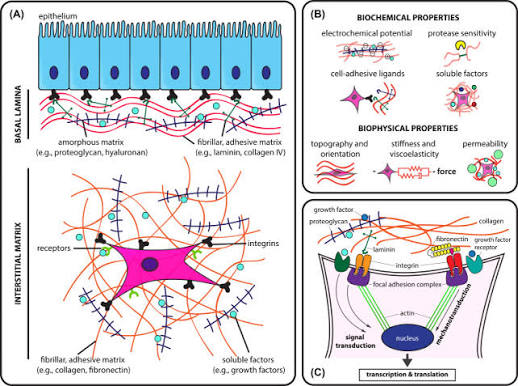
The extracellular matrix is a complex network of proteins and other molecules that provides structural and biochemical support to cells.
Cells respond to features of their surrounding matrix, including stiffness, adhesion sites, geometry, and biochemical signals.
Researchers use polymeric materials to create experimental environments that reproduce selected characteristics of natural extracellular matrices.
These models help investigate cellular migration, differentiation, proliferation, and signaling, although simplified laboratory models cannot fully reproduce every feature of living tissue.

Three-Dimensional Cell Culture
Three-dimensional cell culture systems allow cells to grow within or around a structured environment rather than exclusively on flat surfaces.
Depending on the design, these systems can provide different cell-cell interactions, transport conditions, and mechanical cues.
Hydrogels, porous scaffolds, and other polymer-based matrices are used to investigate cellular behavior in controlled environments.
The selection of a culture material depends on cell type, nutrient transport, imaging requirements, matrix mechanics, and the purpose of the experiment.

Bioprinting and Fabrication Technologies
Bioprinting combines additive manufacturing principles with biological materials, cells, or biologically active components to construct organized structures.
Some systems use hydrogel-based bioinks whose flow behavior, crosslinking, and mechanical stability influence printing performance.
Important challenges include maintaining cell viability, controlling shape fidelity, establishing suitable mechanical properties, and supporting the transport of oxygen and nutrients.
Research in this area brings together polymer chemistry, biomaterials science, cell biology, and manufacturing engineering.
Characterization Methods in Polymer and Biotechnology Research
Scientific characterization provides the measurements needed to understand material composition, structural organization, biological activity, and process performance.
No single analytical method can answer every research question. Reliable investigations often combine complementary techniques.

Spectroscopy and Chemical Analysis
Fourier-transform infrared spectroscopy can help identify characteristic chemical bonds and investigate changes in polymer composition.
Ultraviolet-visible spectroscopy is used to measure the absorption of light by suitable compounds, while fluorescence methods support the detection and analysis of fluorescent molecules.
Chromatographic techniques can separate components in complex mixtures, and mass spectrometry can provide information about molecular masses and chemical identity.
The appropriate method depends on the sample, the target compound, the expected concentration, and the required analytical performance.
Thermal and Mechanical Characterization
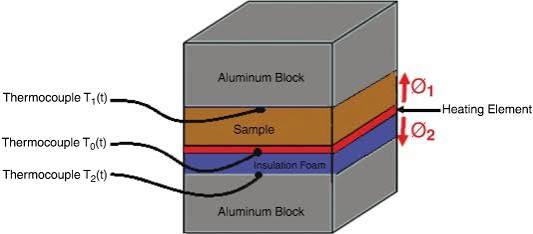
Differential scanning calorimetry investigates thermal transitions, while thermogravimetric analysis measures changes in mass during controlled heating or other specified conditions.
Rheological testing examines material flow and deformation. Mechanical tests evaluate characteristics such as tensile strength, modulus, elongation, compression, and resistance to impact.
These measurements help determine whether a material is appropriate for processing or intended service conditions.
Microscopy and Structural Evaluation
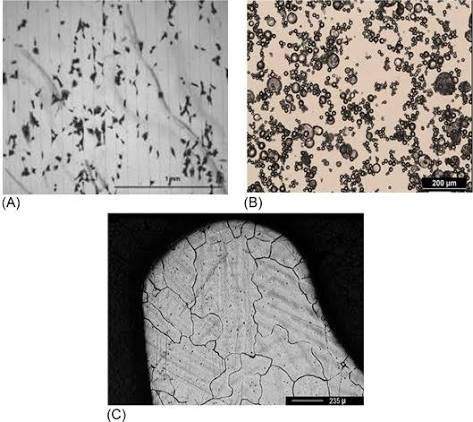
Optical microscopy, scanning electron microscopy, transmission electron microscopy, and atomic force microscopy provide different forms of structural information.
Depending on the method and sample preparation, researchers may examine surface morphology, particle dimensions, internal structures, and selected nanoscale features.
For polymer-biological systems, microscopy can help investigate cell attachment, scaffold structure, particle morphology, and material degradation.

Biological Assays and Experimental Controls
Biological evaluation may include cell viability assays, enzyme activity measurements, protein analysis, microbial growth studies, and molecular assays.
Experimental controls, appropriate reference materials, replicate measurements, and documented procedures are essential for interpreting the results.
Biological variability must be considered when comparing samples or drawing conclusions about material performance.

Emerging Directions in Polymer Science and Biotechnology
Developments in materials science, molecular biology, analytical instrumentation, and computational methods continue to expand the possibilities for interdisciplinary research.
Smart and Stimuli-Responsive Materials
Stimuli-responsive polymers can change selected properties when exposed to conditions such as temperature, pH, light, moisture, or chemical signals.
These systems are investigated for sensing, controlled release, adaptive surfaces, and other specialized applications.
Their usefulness depends on response speed, reversibility, stability, selectivity, and performance under real operating conditions.
Polymer-Based Molecular Delivery
Researchers continue to investigate polymeric systems for transporting nucleic acids, proteins, and other biologically active molecules.
Material architecture, charge, surface chemistry, and degradation behavior can influence interactions with biological barriers and cellular systems.
The development of effective delivery systems requires careful evaluation of stability, biological activity, toxicity, and reproducibility.
Computational Design and Predictive Modeling
Computational approaches can help researchers investigate relationships between molecular structure, material properties, and biological performance.
Molecular simulations, statistical modeling, and machine-learning techniques can support material screening and experimental planning.
Their usefulness depends on data quality, model assumptions, and independent experimental validation.
Integration of Materials and Biological Manufacturing
The combination of engineered materials, biological production systems, and digital process monitoring creates opportunities for more controlled research and manufacturing.
Examples include improved bioreactor components, advanced filtration systems, microfluidic platforms, and materials designed for specialized biological environments.
Progress in these areas depends on collaboration among chemists, biologists, materials scientists, engineers, and analytical specialists.
Connecting Materials Science with Biological Innovation
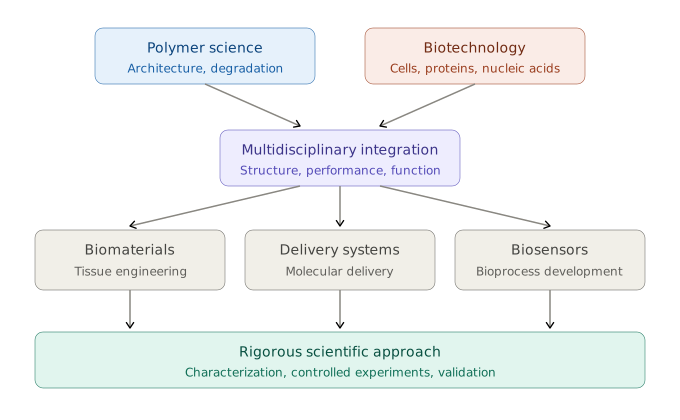
Polymer science and biotechnology offer complementary perspectives on the design, analysis, and application of advanced materials and biological systems.
Polymer chemistry provides methods for controlling molecular architecture, material properties, surface functionality, and degradation behavior. Biotechnology provides the scientific tools needed to investigate cells, proteins, nucleic acids, microorganisms, and complex biological processes.
Their integration supports research into biomaterials, molecular delivery systems, biosensors, tissue engineering, bioprocess development, and sustainable biological technologies.
A rigorous approach combines fundamental scientific understanding with reliable characterization, controlled experimentation, appropriate validation, and responsible material development.
Polymer Science and Biotechnology Research brings these subjects together as a multidisciplinary knowledge platform for readers interested in molecular science, polymer engineering, biomaterials, and biological innovation.
By exploring the connections between molecular structure, material performance, and biological function, this field contributes to a deeper understanding of the technologies shaping modern scientific research.
From polymer architecture to biological function, scientific progress begins with understanding how materials and living systems interact.