Microbial Biotechnology and Polymers

Connecting Microbial Systems with Advanced Polymer Science
Biological Innovation. Polymer Engineering. Sustainable Process Development.
Microbial biotechnology and polymer science represent complementary fields with growing importance in modern industrial research. By combining microbial metabolism, biochemical analysis, and advanced material engineering, researchers can explore innovative approaches to biological production, process optimization, and the development of functional materials.
Microorganisms such as bacteria, yeasts, and fungi offer valuable biological capabilities for producing enzymes, organic acids, biopolymers, and other compounds. At the same time, polymer-based materials provide essential functions in filtration, separation, immobilization, and the design of controlled environments for biological processes.
Integrating these disciplines creates opportunities to improve production systems, enhance experimental reproducibility, and develop material solutions for biotechnology applications.
Exploring Microbial Systems
Microorganisms are versatile biological systems with diverse metabolic pathways and biochemical properties. Their ability to transform substrates into valuable compounds makes them important resources for industrial biotechnology and applied scientific research.
Microbial studies investigate growth characteristics, enzyme activity, metabolic regulation, and interactions with different environmental conditions. These investigations help researchers understand biological performance and identify opportunities to improve selected production processes.
Applications include microbial fermentation, enzyme production, biochemical conversion, and the development of biologically derived materials.
Polymer Science in Biotechnology
Polymers contribute to biotechnology through their structural, chemical, and functional properties. Their versatility allows the development of materials suited to specific processing requirements, including chemical resistance, mechanical stability, selective permeability, and compatibility with particular biological environments.
Polymer-based technologies can support filtration membranes, separation systems, laboratory components, and specialized surfaces used in biological research and industrial manufacturing.
Material selection depends on the intended application, operating conditions, mechanical requirements, and interactions between the polymer and the biological system.

Functional Materials for Bioprocessing
Polymer engineering can contribute to the design of components used throughout biological production workflows.
Membrane technologies: Polymeric membranes support filtration and separation operations, helping researchers separate cells, particles, proteins, and other components according to the characteristics of the system.
Microbial immobilization: Selected polymer matrices and support materials can retain microbial cells or enzymes within a defined structure. Depending on their properties, these systems may facilitate reuse, improve handling, or support continuous processing.
Surface engineering: Polymer surfaces can be designed or modified to influence wettability, adhesion, and interactions with biological components. These characteristics are relevant to laboratory equipment and specialized bioprocessing applications.
Protective and structural components: Polymer materials are widely used in tubing, containers, seals, and other equipment components that must meet specific operational requirements.
Integrating Biotechnology and Material Engineering
The combination of microbiology and polymer science encourages interdisciplinary approaches to industrial challenges. Microbial processes generate biological products, while engineered materials can support their cultivation, separation, stabilization, and downstream handling.
For example, membrane-based systems can assist in separating fermentation products from complex mixtures. Immobilization materials can provide support for selected microbial or enzymatic processes, while polymer characterization helps determine whether a material remains suitable under particular operating conditions.
Collaboration between microbiologists, biochemists, materials scientists, and process engineers can therefore contribute to the development of more efficient and reproducible production systems.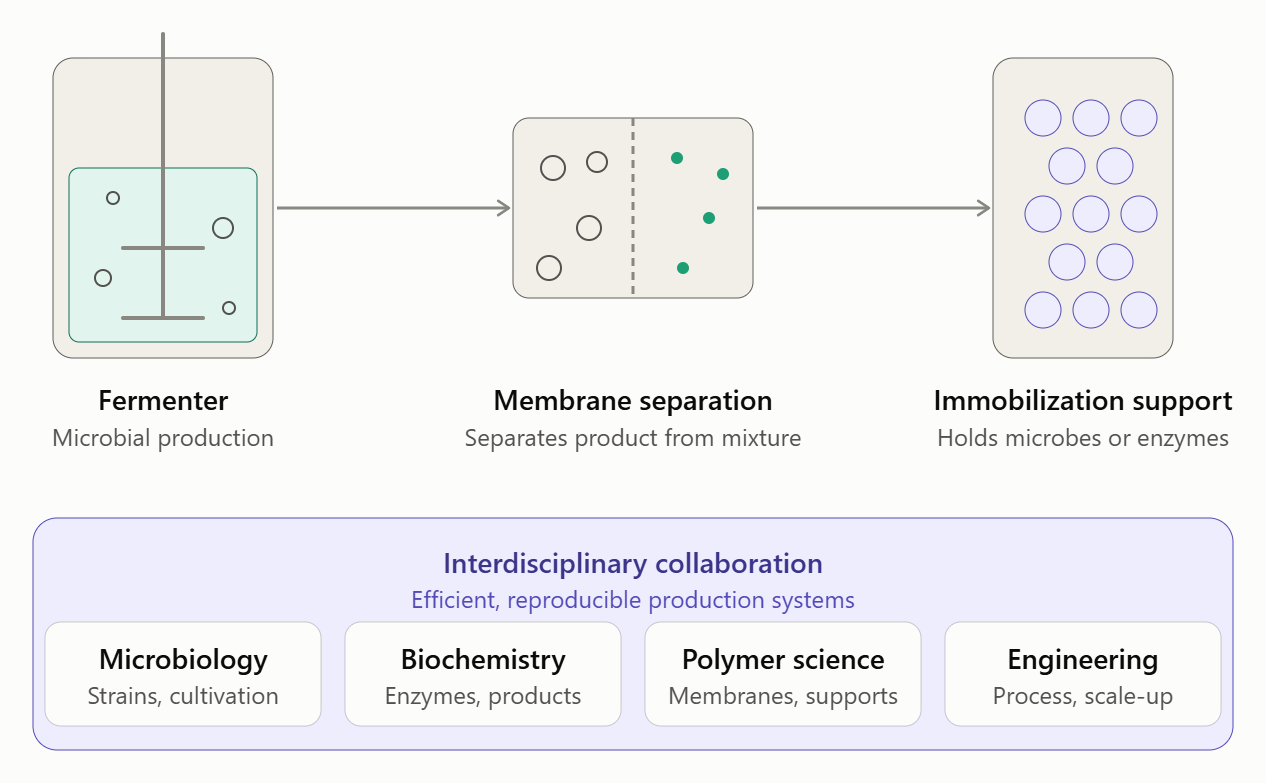
Sustainable Approaches to Industrial Biotechnology
Sustainability is an important consideration in the development of biological production technologies and advanced polymer materials.
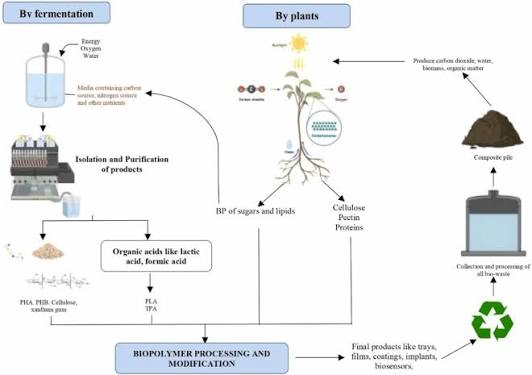
Microbial processes can transform renewable feedstocks and selected biological residues into useful compounds. Polymer research can complement these approaches by investigating bio-based materials, resource-efficient processing, and improved material recovery or recycling strategies.
However, environmental performance depends on the entire production pathway, including raw material sourcing, energy consumption, manufacturing conditions, durability, and end-of-life management.
Combining biological production with thoughtful material design can help researchers identify practical opportunities to reduce resource use while maintaining product quality and process performance.

Research and Development Perspectives
Ongoing advances in microbial biotechnology and polymer engineering are expanding the possibilities for industrial research.
Emerging areas include microbial biopolymer production, functional membrane development, enzyme immobilization, bio-based materials, and the integration of advanced analytical techniques into bioprocess monitoring.
Progress in these fields depends on reliable experimental methods, appropriate material characterization, process optimization, and careful assessment of the interactions between biological systems and engineered materials.
By connecting biological knowledge with materials innovation, researchers can develop new approaches to manufacturing, separation technologies, and sustainable industrial applications.
Advancing Biological and Material Innovation
Microbial biotechnology and polymer science provide complementary tools for addressing challenges in biological production and industrial material development. Microorganisms offer valuable biochemical capabilities, while polymer technologies contribute functional structures and materials that support process efficiency and reliability.
Through interdisciplinary research, these fields can help advance microbial production systems, functional biopolymers, membrane technologies, and material solutions designed for specialized industrial applications.
Discover the potential of microbial systems and polymer engineering in shaping the next generation of biotechnology processes and advanced materials.